
Viminaria Juncea – Native Broom seeds
Reforest AustraliaCape Schanck Road, Cape Schanck, Victoria, Australia
$14.00
Viminaria juncea – Native Broom
Packet of 250-300 seeds.
SEEDS: Enough for you to successfully grow between 150-300 plants. Your seeds are of the same stock we use to grow our native plants in the nursery. The success of germination varies with open-pollinated, wild-collected seeds and after years of consistently growing these species in the local area, I have selected the amount of seed you need to successfully grow between 150-300 plants yourself. These seeds are collected seasonally and with sincere cultural and ecological respect. Ordering a quantity according to this scale rather than ordering individual seeds is a better representation of sustainable seed harvesting and success for the grower.
Viminaria juncea – Native Broom
Habit and Habitat:
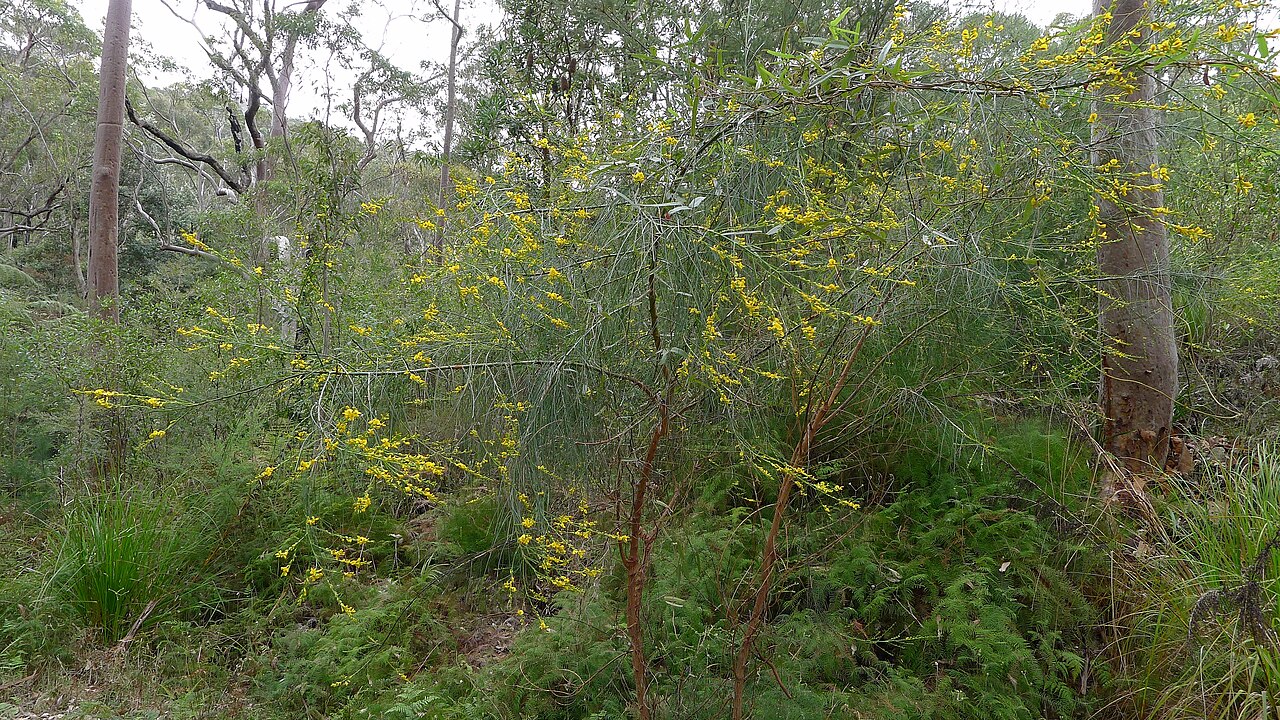
Viminaria juncea, commonly known as Native Broom, is a graceful and fast-growing shrub or small tree endemic to Australia. It is most commonly found in wetland areas, along watercourses, swamps, and seasonally damp soils across the Southeast. This plant thrives in sandy, acidic soils and tolerates waterlogging, making it a resilient species in wet environments.
Place in Local Habitat and Ecosystem Distribution:
As a native wetland species, Native Broom provides critical habitat for wildlife, including shelter for small birds and insects. It contributes to stabilizing soil in wetland and riparian areas, preventing erosion. Its nitrogen-fixing properties improve soil health, benefiting surrounding vegetation.
Planting Companions:
Native Broom pairs well with other moisture-loving Australian natives, such as Melaleuca ericifolia (Swamp Paperbark), Leptospermum lanigerum (Woolly Tea-tree), and Carex appressa (Tall Sedge). These combinations create a thriving wetland or riparian garden while supporting biodiversity.
Human and Wildlife Uses:
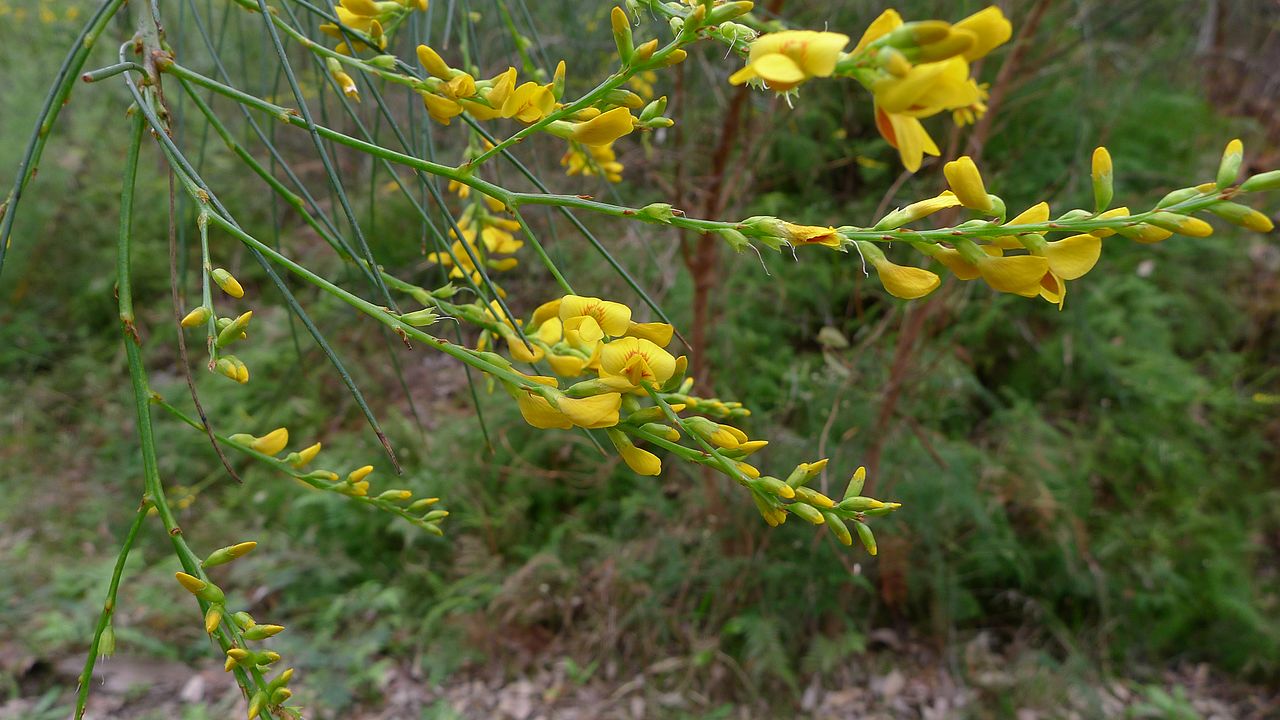
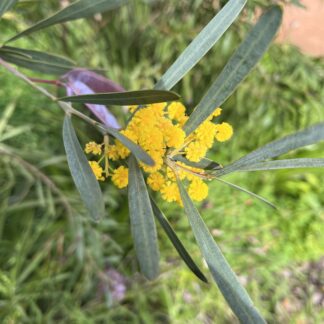
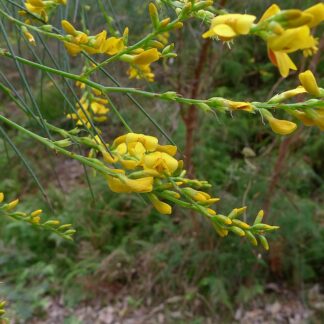
Native Broom attracts pollinators such as bees and butterflies with its bright yellow pea-like flowers. Birds use its fine, pendulous foliage for nesting material and shelter. Traditionally, Indigenous Australians used its long, pliable stems to craft brooms and other implements.
Care Instructions:
Viminaria juncea is hardy and adaptable, thriving in sunny to partially shaded positions. It prefers damp or waterlogged soils but can tolerate drier conditions once established. Regular watering is required during the establishment phase, especially in well-drained soils. Pruning after flowering helps maintain a tidy shape and encourages new growth. This plant is best suited for wetland-style gardens, riparian areas, or areas prone to seasonal flooding.
Size, Height, Width, Flower, and Leaf Characteristics:
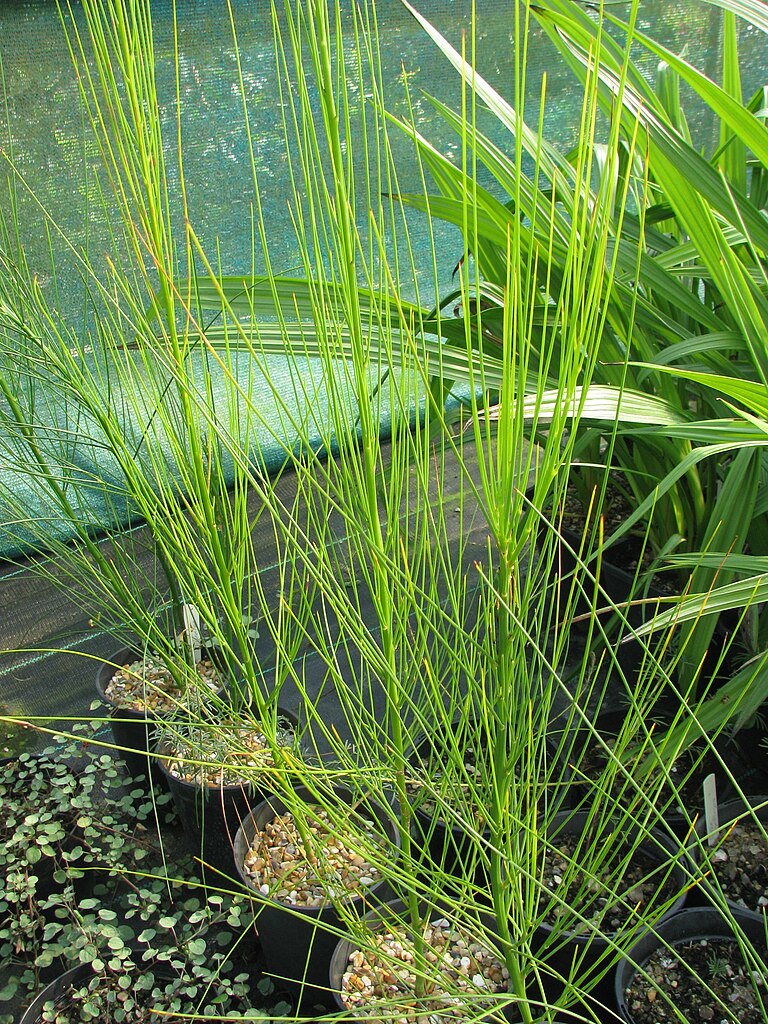
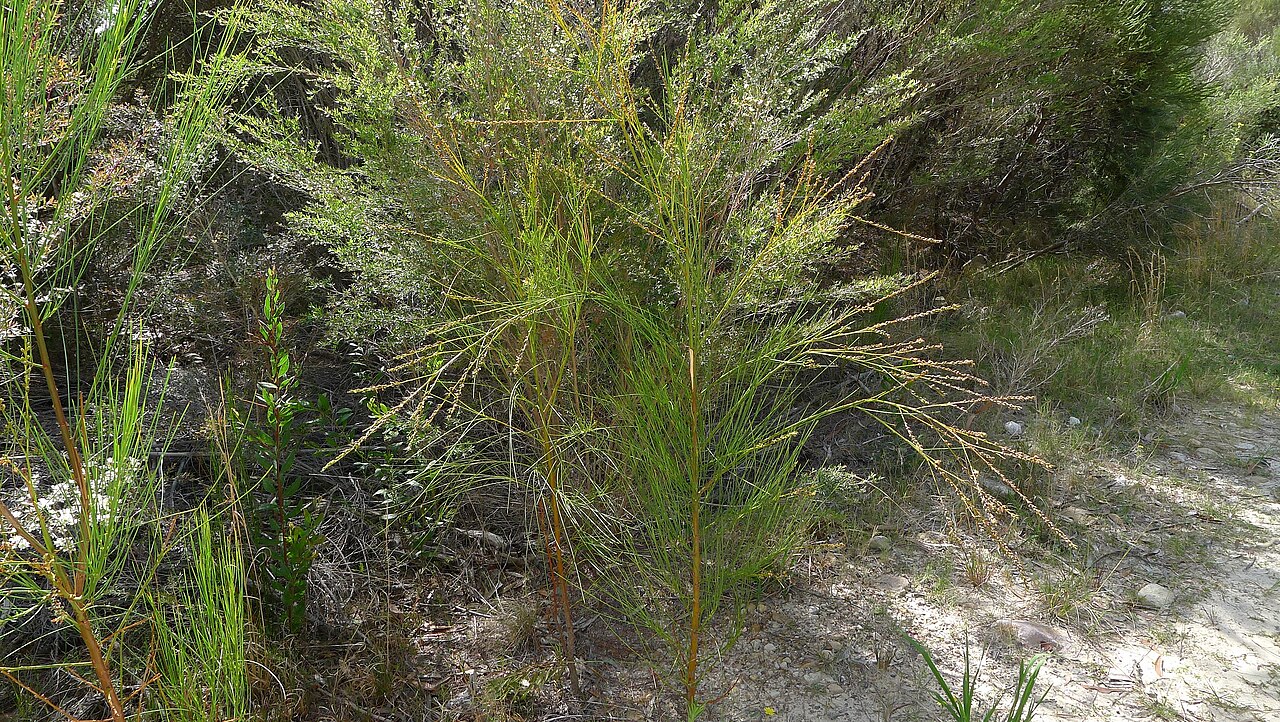
Native Broom typically grows to a height of 2 to 5 meters with a width of approximately 1 to 2 meters, forming a narrow, weeping habit. Its foliage consists of slender, drooping stems with minute, scale-like leaves. From spring to summer, the plant produces striking bright yellow, pea-shaped flowers that cluster along the stems, providing a vibrant display.
Latin Etymology:
The genus name Viminaria derives from the Latin word “vimen,” meaning “willow-like twig,” referring to its fine, flexible stems. The species name juncea means “rush-like,” describing the plant’s slender, upright appearance.
Traditional Uses:
Indigenous Australians used the stems of Native Broom for weaving and crafting brooms. The plant’s natural growth habit and pliable stems made it an excellent material for everyday tools and implements.
Planting Guidelines:
To grow Native Broom in your home garden, choose a location with full sun to part shade and moist, well-drained to waterlogged soil. It is an excellent choice for wetland gardens, pond edges, or low-lying areas prone to flooding. Mulching around the base helps retain soil moisture and suppress weeds. Avoid overly dry locations unless regular irrigation is possible. This fast-growing species requires little maintenance apart from occasional pruning to maintain its shape. With its striking flowers, graceful form, and ecological benefits, Native Broom is an ideal choice for gardeners looking to support wildlife and enhance water-sensitive landscapes.
PROPAGATION NOTES:
For great results refrigerate your seeds for 1-2 weeks before sowing. This emulates an over-wintering effect that helps with germination rates.
Sow seeds in a native-specific potting mix.
A good general rule to follow is to sow seeds at a depth relative to the size of the seed.
(Eucalyptus seeds require a light dusting of soil as their seeds are usually tiny. Warrigal Greens require a 50mm to 100mm depth.)
Keep moist, water daily until germination in 3-12 weeks at a minimum of 15° Celsius.
Reduce your watering amount once germination has occurred.
Sow at any time of the year, but you’ll experience a lower germination rate in the middle of winter.
Photo attributions:
“Viminaria juncea” by John Tann, CC BY 2.0
8 in stock

-

Banksia Integrifolia – Coast Banksia seeds
$15.00 Add to cart -
Banksia Robur – Swamp Banksia seeds
$15.00 Add to cart -
Poa Sieberiana – Snow Grass seeds
$12.00 Add to cart -
Melaleuca ericifolia – Swamp Paperbark seeds
$10.00 Read more -
Ficinia Nodosa – Knobby Club-rush seeds
$12.00 Add to cart -
Callistemon Viminalis – Weeping Bottlebrush seeds
$14.00 Add to cart




Reviews
There are no reviews yet.