
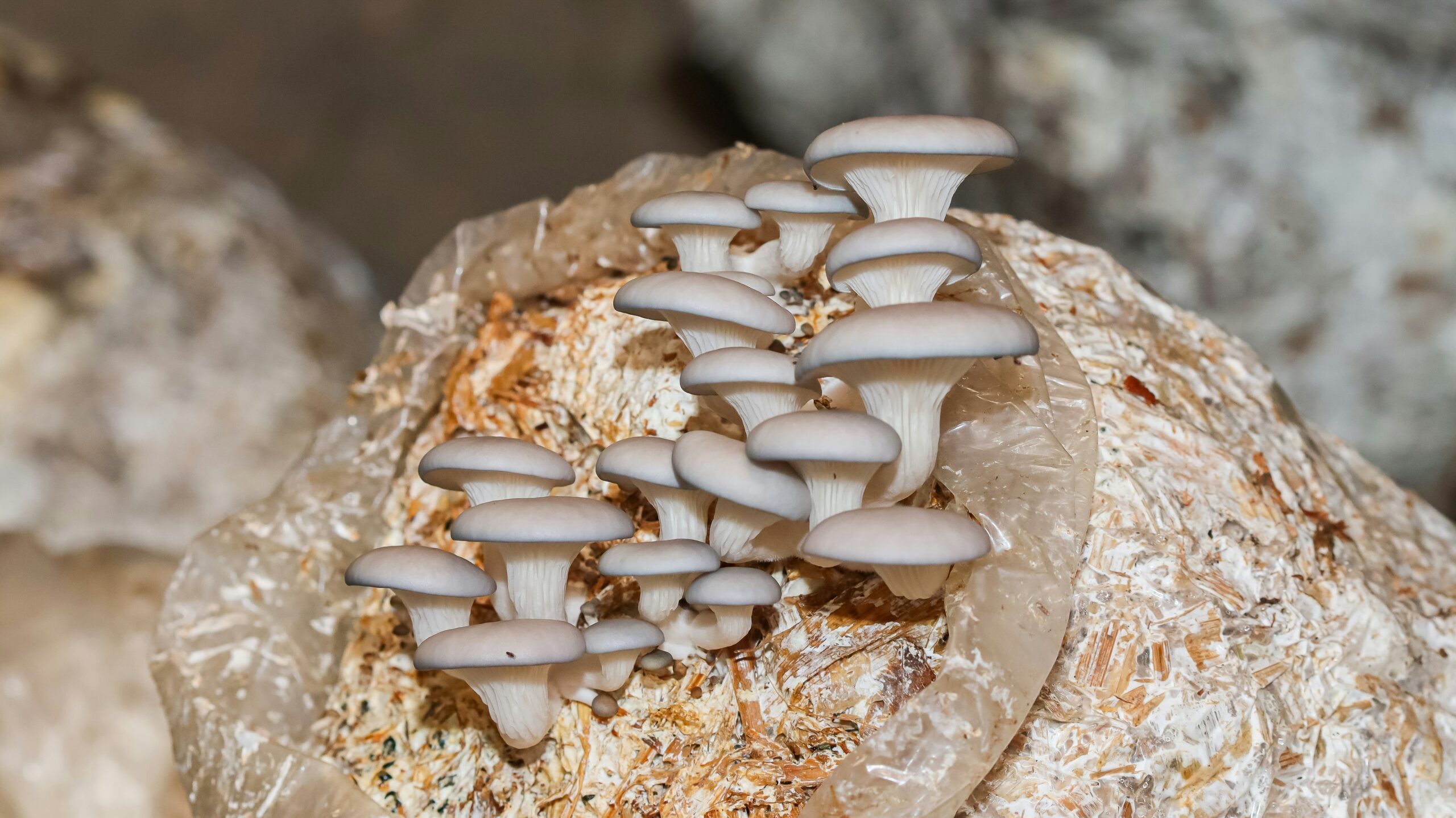
If you’ve ever wondered whether growing mushrooms without a kit is possible, the answer is yes — and one of the easiest methods uses something you probably already have at home: used coffee grounds and cardboard. Pair them with the stems from fresh oyster mushrooms, and you’ve got a simple, fun, hands-on project that introduces you to the magical world of mycelium. Follow our guide below to learn how to grow mushrooms in coffee grounds.
This method is perfect for beginners and especially for kids, who love checking the container each day to see how the mushrooms develop. It’s a great way to recycle kitchen waste and learn how fungi grow.
Why Use Coffee Grounds and Cardboard?
Coffee grounds are nutrient-rich and partially pasteurised during brewing, giving the mycelium a small advantage.
Cardboard, on the other hand, provides structure, airflow, moisture retention, and a cleaner, low-nutrient surface that oyster mushrooms colonise quickly. It helps balance out the dense, compact texture of coffee grounds and reduces the risk of anaerobic pockets.
Together, they make a simple, beginner-friendly substrate for small-scale oyster mushroom growing experiments.
What You’ll Need
- The base (stem section) of fresh oyster mushrooms
- Freshly brewed coffee grounds (still warm is ideal)
- Clean, plain cardboard (no glossy printing)
- A clean container, jar, or mushroom grow bag
- A spray bottle with clean water
- A warm spot (18–24°C)
Step-by-Step: How to Grow Oyster Mushrooms in Coffee Grounds
Step 1: Pasteurise the cardboard
This gives the mycelium a clean material to colonise:
- Tear the cardboard into small strips or pieces.
- Place it in a heat-safe bowl or bucket.
- Pour freshly boiled water over it, ensuring it’s fully submerged.
- Let it sit for 20–30 minutes.
- Drain and gently squeeze out excess water — it should be damp, not dripping.
Step 2: Prepare your mushroom stems
Keep the dense white stem base attached to your oyster mushrooms. Trim away any dirty or dry outer layer, then tear the base into small pieces about 1–2 cm wide. These contain living mycelium that will colonise the coffee grounds.
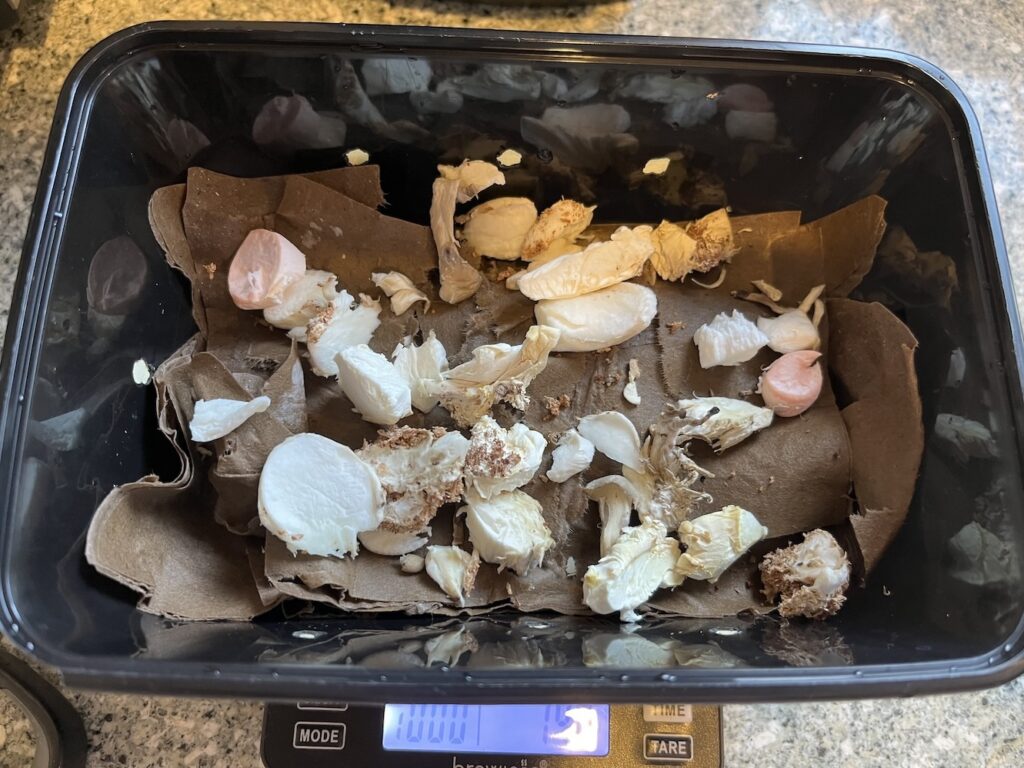
Step 3: Inoculate the cardboard (let it colonise first)
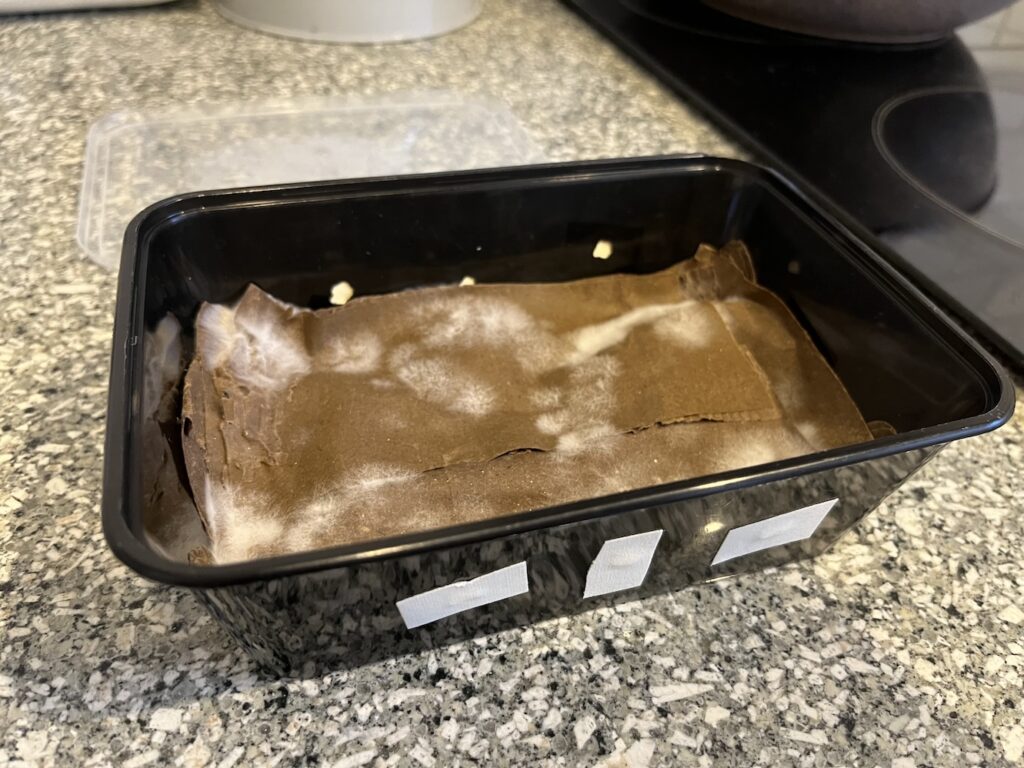
Open up the layers of the damp cardboard and place small pieces of the oyster mushroom stems between them, like a sandwich. Press lightly so the stem pieces make good contact.
Place the cardboard into a clean container or jar, close it loosely, and store in a warm, dark cupboard.
Over 1–2 weeks, the cardboard should gradually turn white as the mycelium spreads.
Step 4: Add the Coffee Grounds
Once the cardboard is visibly colonised, it’s time to feed the mycelium something richer: fresh coffee grounds.
Coffee is nutritious but more contamination-prone, so adding it after the colony is strong greatly increases your success.
To add it properly:
- Add just a thin layer (1–2 cm) for now.
- Use freshly used grounds — ideally within the hour.
- Loosen them lightly with a fork so they’re fluffy, not dense.
- Gently spoon or pour the grounds on top of the colonised cardboard.
- Do not mix or press down — mixing disrupts the mycelium’s structure.
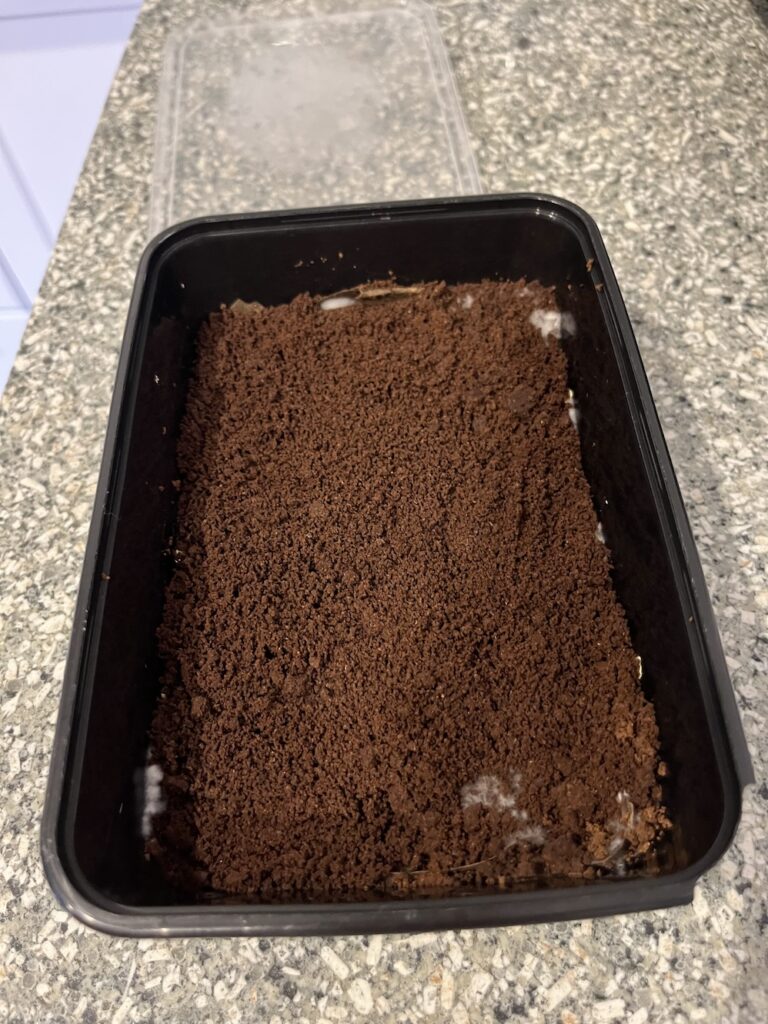
Close the container again and let the mycelium climb upward into the coffee.
Step 5: Continue Layering
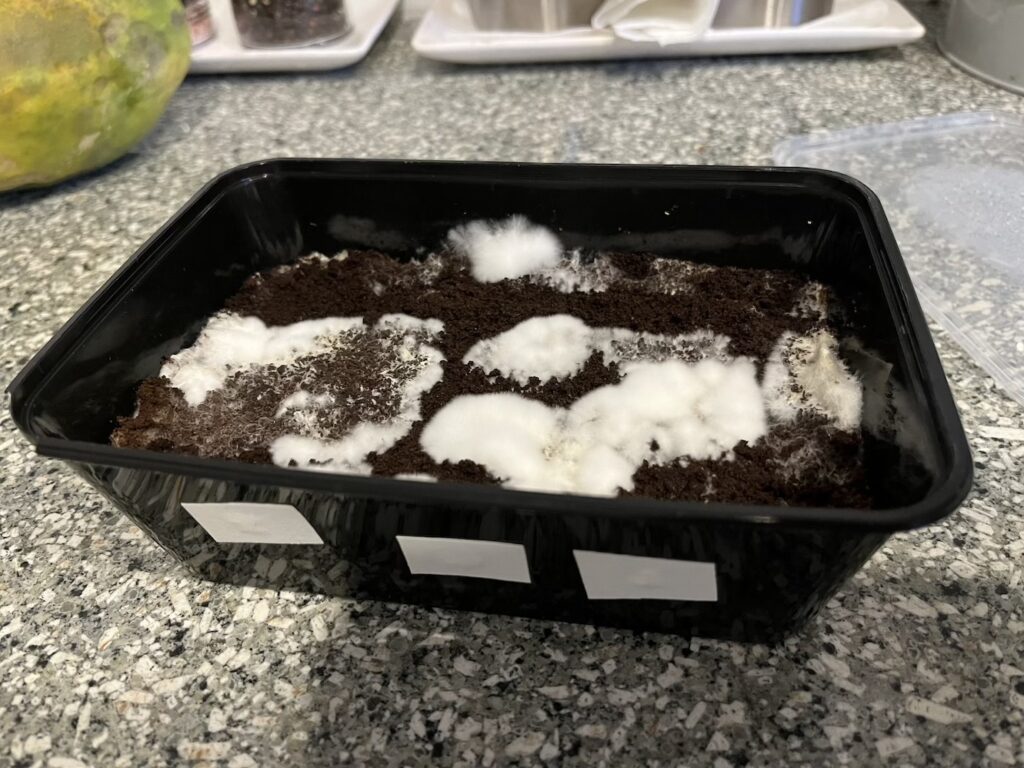
As the colony grows, you can repeat the process:
- Allow the mycelium to fully colonise the coffee.
- Add another thin layer of fresh coffee grounds.
- Let it colonise again.
Each layer builds a stronger, thicker block of substrate.
Step 6: Trigger Fruiting
Once the container is mostly colonised and looks solid white:
- Open the lid or poke a few air holes.
- Move it somewhere bright but not in direct sunlight.
- Mist lightly each day.
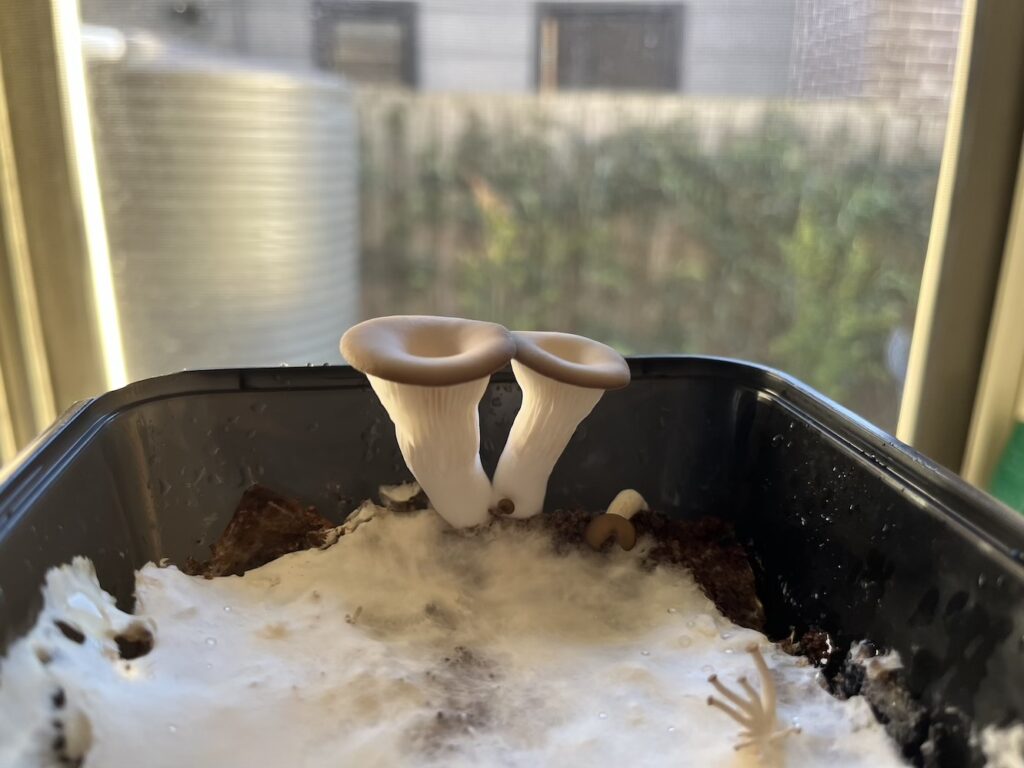
After a few days, tiny pins (baby mushrooms) will appear. They’ll double in size every day.
Harvest when the edges of the caps flatten out — before they turn up.
Caveats to Keep in Mind
This method is simple and surprisingly effective, but there are a few things to be aware of:
- Coffee is prone to contamination, so always use fresh grounds and let the mycelium colonise the cardboard first for best results.
- Because you’re starting with stem butts rather than commercial spawn, yields may be smaller than a professional grow kit.
- Oyster mushrooms grow aggressively, but success rates vary depending on temperature, cleanliness, and how fresh your materials are.
That said, it’s still a fantastic activity for learning, experimenting, and making the most of kitchen scraps. And once you get a taste of the process, upgrading to a professional kit is a natural next step.
Looking for Bigger, More Reliable Harvests?
If you love the idea of growing mushrooms at home but want stronger, more consistent results, our mushroom grow kits are the easiest and most reliable way to get generous flushes:
👉 Explore Mushroom Growing Kits
These kits are made with professionally prepared, sterile substrates designed for optimal mushroom growth — perfect for beginners, families, and anyone wanting predictable results without the mixing, prepping, or guesswork.